

The French Whistleblower Protection Law
Explore the French Whistleblower Protection Law, including compliance requirements, scope, and how to support and protect reporting in your organization.
Explore the French Whistleblower Protection Law, including compliance requirements, scope, and how to support and protect reporting in your organization.

On 21 March 2022, the last formal step was taken to bring into force a Whistleblower Protection law in France.
In its implementation of the EU Whistleblower Protection Directive into national law, France has gone further than the minimum standards required at the EU level.
The French Whistleblower Protection law goes further than France’s existing law, “Loi Sapin II”, that had previously provided protection for whistleblowers. Organizations are required to review their compliance program, as adherence to Loi Sapin II no longer means they will automatically comply with the updated whistleblowing regulations.
For instance, there is a broader application of the law in terms of the requirements on organizations, the types of whistleblowers protected and the kind of misconduct that counts as a whistleblowing matter.

The French whistleblowing law is based on the minimum standards of the EU directive, which means companies are to comply with the following requirements:
Just like Sapin II, the new law applies to all organizations with 50 employees or more operating in France. This applies to all organizations at the same time, thus removing the tiered approach outlined by the EU Directive.
The updated French whistleblower protection law expands both how reports can be made and who is protected. It introduces a broader definition of a whistleblower and a whistleblowing report, while aligning key elements of the reporting process with the EU Directive.

Protection for whistleblowers has been further strengthened by the introduction of stricter penalties that include three years imprisonment and a fine of EUR 60,000 for those who victimize or discriminate against a whistleblower.
The law reinforces existing protection provided under Loi Spain II by explicitly prohibiting “harm, including damage to the reputation of the person, in particular on an online public communication service, or financial loss, including loss of business and loss of revenue.”
Organizations in France should do their utmost to encourage whistleblowers to report their concerns internally first to enable matters to be resolved faster, and reduce costly and potentially reputationally damaging legal processes. Two of the key aspects to achieving this are creating a climate of trust within the organization and providing a confidential reporting channel that is always accessible, secure and user-friendly.

The new law introduces a wider definition of a whistleblower and a whistleblower report, and makes changes to the required reporting process within Loi Sapin II.
In accordance with the EU directive, the new French Whistleblower Protection Law introduces a free choice of reporting.
Previously, whistleblowers in France were obliged to report their concerns internally. For external processing of a whistleblowing report to be possible, the report must have first been made internally to the employer or to its representative. This is no longer the case. A whistleblower will now be free to report externally if they do not believe that the case can be resolved internally or if they fear they will be subject to retaliation. Several competent authorities have been appointed to receive external reports, including the French Defender of Rights (Défenseur des droits).

In accordance with the EU Directive, the new French law introduces a free choice of reporting.
Previously, whistleblowers in France were required to report concerns internally before an external report could be made. This is no longer the case. Individuals may now choose to report externally if they believe the issue cannot be effectively resolved internally or if they fear retaliation.
Several competent authorities have been designated to receive external reports, including the French Defender of Rights (Défenseur des droits).

The updated law broadens the definition of who qualifies as a whistleblower and who is eligible for protection.
Protection now extends beyond employees to include any natural person who reports or discloses violations of the law, breaches of international commitments, or threats to the public interest. This applies regardless of whether the information was obtained directly or indirectly.
The law also extends protection to individuals who support or assist whistleblowers, including non-profit organizations such as trade unions, as well as military personnel.

8 Sep 2026 NAVEX Editorial Team
See how responsible AI can support reporters and investigators, reduce manual work and help compliance teams uncover more value from whistleblowing data.
Read more

Customer Story
From regional hotlines to a globally connected speak-up program: BASF strengthens trust, transparency and compliance with NAVEX – and makes speaking-up more accessible for employees in manufacturing and operational roles.
See their story

Webinar Upcoming
Join us for a fresh, practical demo to see the latest from Nira and discover how purpose-built AI can help you capture clearer information at intake, find trusted answers, make sense of compliance data and take some of the legwork out of everyday compliance. We’ll also zoom out to the bigger picture, exploring how Nira fits into NAVEX’s wider approach to AI and what’s coming next. Have a question or compliance challenge? Submit it when you register and we may explore it live.
Save your seat!

1 Sep 2026 NAVEX Editorial Team
Explore the latest whistleblowing trends shaping compliance programs across Europe.
Read more

31 Aug 2026 Press release
NAVEX, the global leader in integrated risk and compliance management software, today introduced Nira for Intake, bringing purpose-built AI to one of the most consequential moments in any ethics and compliance program: when someone decides to speak up.
Read the news

Use Case
Create a code that you are proud to share.
Get the use case

Webinar Upcoming
How well do you really know conflicts of interest? Put five common myths to the test and learn what stronger conflict of interest programs do differently.
Save your seat!
11 Aug 2026 NAVEX Editorial Team
A successful speak-up program starts with trust. Discover eight practical strategies to increase reporting, strengthen employee confidence and build a healthier ethics and compliance culture.
Read more

10 Aug 2026 Press release
NAVEX, the global leader in integrated risk and compliance management software, today announced it will reimagine its industry-leading WhistleB solution to further meet the needs of European-based organisations that want to build speak-up cultures while complying with increasing regulatory requirements.
Read the news

30 Jul 2026 Carrie Penman
Multiple customers are reporting similar, suspicious reports to their hotlines – this post explores practical steps to reduce phishing and hoax-report risk.
Read more

eBook
Even well-designed speak-up programs can lose credibility when investigations drag on, communication breaks down or employees fear retaliation.
Download this ebook to uncover seven common mistakes that undermine reporting confidence – and practical ways to build greater employee trust.
Get the eBook
Datasheet
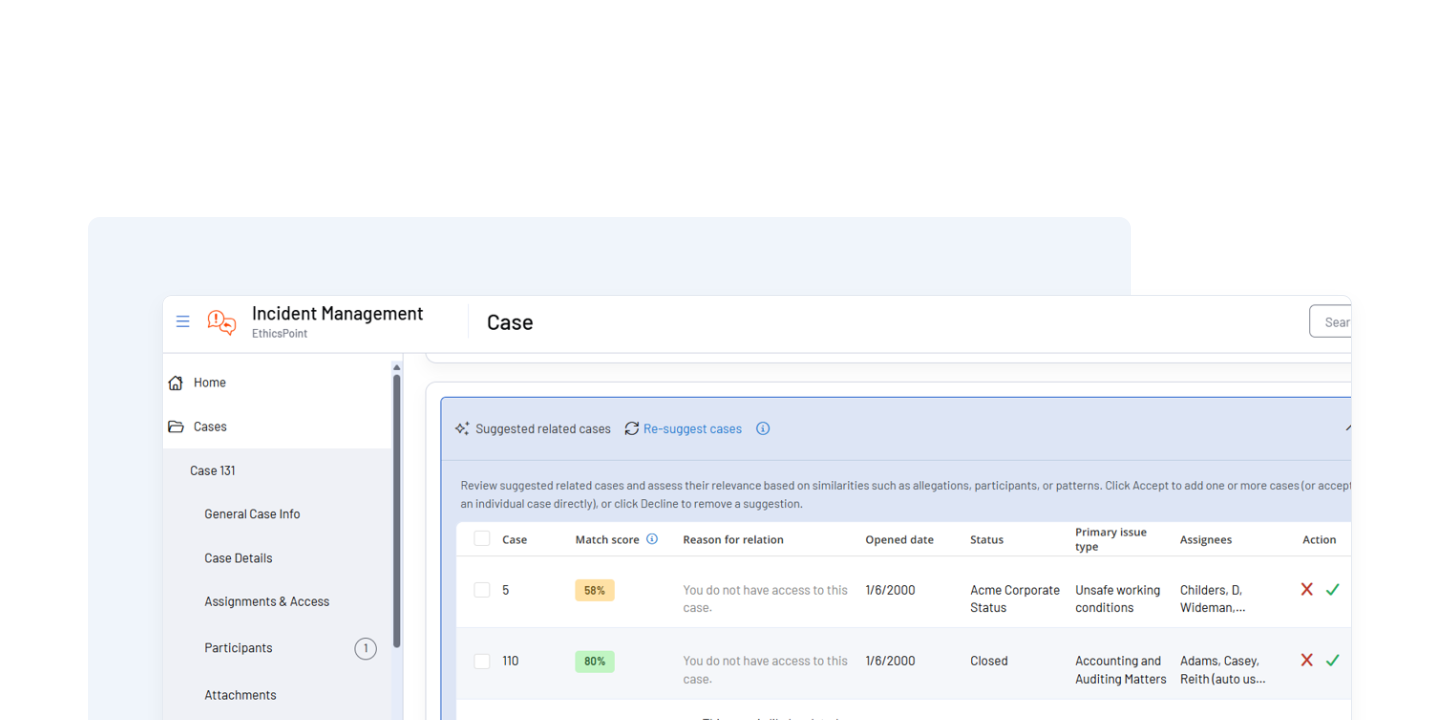
See how AI-assisted workflows help employees report concerns, help compliance teams classify reports, understand case details, improve documentation and manage investigations more efficiently, while keeping human judgment and oversight at the center.
Get the datasheet
France’s regulatory environment is complex and constantly evolving. Get the insights you need to strengthen your compliance program, reduce risk, and build a culture of transparency.