Skip to content.
Customer Story

Integrating Fragmented Internal Reporting Channels to Transform the “Voice of Employees” into a Strategic Management Resource

Hitachi, Ltd. is a global enterprise with approximately 280,000 employees worldwide, around 600 subsidiaries, and numerous group companies. To establish an effective internal reporting system, the company fully implemented the NAVEX Whistleblowing & Incident Management solution in 2020 and launched the “Hitachi Global Compliance Hotline.” Currently, the system receives approximately 2,000 internal reports annually from both domestic and international sources, functioning as a core infrastructure supporting global governance.


Available in
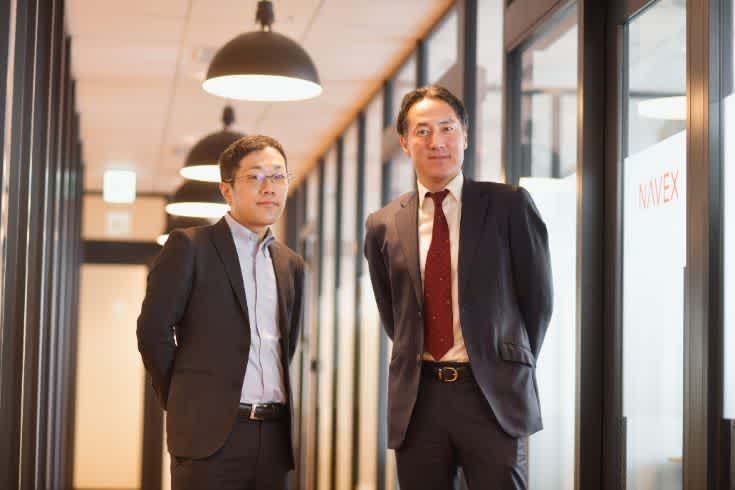
モダンなオフィスのガラス張りの廊下で、スーツを着たビジネスパーソンが並んで立っている様子。

About Hitachi, Ltd.

Hitachi, Ltd.

Founded in 1910, Hitachi is Japan’s largest comprehensive electrical equipment manufacturer and has long supported the development of the country’s industry. The company continues to provide innovative technologies and products across a wide range of fields—from electrical equipment to information systems and social infrastructure systems—while promoting its Social Innovation Business to realize a sustainable society. 

General Manager, Compliance Department, Compliance Division
Ko Yamaki

“The increase in the number of reports is not a sign of rising misconduct, but rather evidence that the organization is functioning soundly and that employees feel safe to speak up.” 

Deputy General Manager, Compliance Department, Compliance Division 

Masahiro Kojima

“As personal data protection laws and cross-border transfer regulations become increasingly stringent worldwide, a key challenge going forward is how to ensure that a globally centralized management platform remains compliant with the laws and regulations of each country.”

Industry

Electrical equipment; diversified industries (including IT, energy, mobility, etc.)

Employees

Number of consolidated employees: 282,743

Implemented Services

Whistleblowing & Incident Management solution, Custom Analytics & Benchmarking, Regulatory Change Management for Global Whistleblowing

Primary challenge: 

  • The number of internal reports received directly by headquarters had stagnated at around 30 cases per year. 
  • Subsidiaries and group companies operated their own reporting channels independently, making it difficult for headquarters to gain a global overview of reports and creating a risk that serious misconduct could be concealed.
  • Many anonymous reports were submitted via one-way communication methods such as phone or email, which hindered effective investigations.
  • The company faced challenges in responding to increasingly stringent regulations in various countries and was seeking solutions.

Primary outcome: 

  • The use of an external vendor lowered psychological barriers to reporting and contributed to fostering a “speak-up culture.”
  • The number of internal reports has been increasing by approximately 25% annually, reaching around 2,000 cases per year. 
  • Centralized management of reporting data at headquarters has enabled timely visibility into actual conditions and faster investigative responses.
Five people sit around an oval table, working together with a laptop, papers, and pens in a modern office setting with orange chairs, viewed from above.
Challenge

Implement a centralized system for managing internal reports to prevent misconduct and strengthen governance.

In the past, the Hitachi Group’s internal reporting system was not fully capable of functioning at a level commensurate with the scale of its organization. Masahiro Kojima, Deputy General Manager of the Compliance Department at the Compliance Division, reflects on the situation at the time:

 “The previous reporting channel operated by Hitachi headquarters relied on traditional methods centered on email and telephone, which created extremely high psychological barriers to reporting. As a result, the number of reports received by headquarters was only around 30 per year. Considering a workforce of 280,000 employees, this number was unnaturally low.”

 Furthermore, because subsidiaries and group companies each operated their own independent reporting channels, there was a structural issue in which important signs of misconduct were not shared with headquarters in a timely manner, as pointed out by Ko Yamaki, General Manager of the Compliance Department at the Compliance Division:

 “Even if misconduct involving management were to occur at a particular site, there was a risk that it could be concealed internally. Serious violations such as breaches of competition law or bribery, which can impact the entire group, can become critical if initial responses are delayed. It is therefore essential to detect such issues as early as possible.”

In addition, traditional anonymous reporting made two-way communication difficult, often hindering fact-finding and evidence collection, and leading to investigations being abandoned midway. In other words, there was a structure in which “the courage of employees who spoke up was not rewarded.”

A close-up of a construction worker holding a blue hard hat, wearing a yellow safety vest, with three other workers in safety gear blurred in the background on a construction site.
Solution

Why NAVEX was selected: A world-class platform combined with a robust intake and reporting system.

To fundamentally transform this situation, Hitachi selected NAVEX One’s Whistleblowing & Incident Management solution.

“The decisive factors were NAVEX’s exceptional multilingual capabilities and its 24/7 intake system. It was essential to create an environment where employees at all of Hitachi’s global locations could speak up safely and at any time in their native languages,” said Kojima.

What the executive team particularly valued was the speed and comprehensiveness enabled by centralized management.

“By consolidating data from all locations onto a highly reliable platform, we can instantly gain a comprehensive, group-wide view. We can quickly identify where issues are occurring and what types of problems are emerging in each region. Such data is essential for making timely management decisions. Compared to the cost of implementation, the risks of neglecting compliance – such as brand damage or substantial financial penalties – were considered far more significant,” said Yamaki.

The reasons for selecting NAVEX were not limited to its broad coverage. In addition to its proven reliability backed by adoption by over 13,000 companies, its integrated capabilities – spanning report intake, case management, and data analysis – were also key decision factors.

“It was evaluated not merely as a reporting tool, but as a platform that supports our entire compliance program,” Yamaki added.

A 25% annual increase in reporting volume, enabling greater risk visibility and improved investigation efficiency.

In April 2020, Hitachi began full-scale operation of the system across approximately 800 group companies worldwide. However, implementing it across such a vast organization was not without challenges.

“Many group companies had long operated their own internal reporting channels, and there was some resistance to having information centralized at headquarters. To address this, we carefully explained the benefits of the new system and gained their understanding. We also adopted a phased approach  – maintaining local reporting channels for the first six months, then fully integrating them afterward,” said Kojima.

The impact of the implementation was dramatic. From the outset, the number of reports steadily increased at an annual rate of around 25%, reaching approximately 2,000 cases per year as of this writing.

“Perhaps because introducing an external vendor reduced the psychological barrier to reporting, we began receiving reports from the very first day. The increase in reporting does not indicate a rise in misconduct, but rather a ‘sign of improved organizational health,’ as previously hidden voices are now being heard. In fact, we have received critical reports involving significant management risks, which has greatly contributed to misconduct prevention,” said Yamaki.

The ability to enable anonymous two-way communication has also significantly improved the quality of investigations.

“By using the system, reporters can communicate with investigators via chat while maintaining anonymity. It has also become much easier to submit supporting documents, dramatically improving both the speed and accuracy of investigations,” Kojima explained.

Previously, reports from each business unit and group company were manually compiled every six months – a time-consuming process that left the team “barely able to produce summary figures.” This situation changed completely with the use of NAVEX One’s analytics tool, Custom Analytics & Benchmarking, which now enables real-time visibility into reporting trends and has improved the speed of audit responses.

“What used to be difficult – such as extracting a list of reports for a specific organization – can now be completed in just one to two minutes. We can easily filter by region or category, which has been especially well received by audit team members. We are now able to provide precise, up-to-date data to management within minutes, establishing a strong foundation for more advanced governance decision-making,” Yamaki added.

Two construction workers in safety vests and hard hats stand facing a multi-story building under construction. One wears an orange vest, the other a yellow one. Scaffolding and part of a crane are visible in the background, under a clear sky.

Steady awareness-building efforts centered on “communication” and “trust-building.”

Of course, simply implementing a system does not lead to dramatic change. What Hitachi’s Compliance Department has focused on is a steady and thorough approach centered on “awareness” and “building trust.”

“To prevent the system from becoming a mere formality, we must continue persistent awareness efforts. At the same time, we must conduct sincere investigations into every report received and provide feedback on the outcomes. Trust in the organization can only be built through the consistent repetition of such sincere actions,” said Yamaki.

In terms of awareness, their efforts go far beyond simply putting up posters.

“During ‘Ethics Month’ every October, the CEO personally delivers a video message to employees worldwide, emphasizing a zero-tolerance stance on misconduct and promoting the reporting channels, complete with multilingual subtitles. In addition, we take every opportunity to raise awareness – through e-learning programs for all employees, training for newly appointed managers, and the distribution of cards with QR codes linking to the reporting channels,” Yamaki explained.

Equally important, Kojima emphasizes, is building trust in the system.

“If employees believe that speaking up will lead to their concerns being ignored or to retaliation, no one will report. To enhance transparency in investigations, we have set a target of delivering investigation results within 90 days in principle. Delays can create anxiety for reporters and may even lead them to give up on internal reporting and instead turn to external channels such as the media,” Kojima noted.

Recently, the company has also been focusing on greater data transparency**.**

“By disclosing investigation data, we send a clear message that the company takes reports seriously and conducts investigations with integrity. In our annual employee survey, which asks whether Hitachi responds sincerely to reports, the proportion of positive responses has been increasing year by year. We see this as evidence that our efforts are bearing fruit,” Kojima added.

A modern cityscape at dusk with futuristic buildings and a bridge with green-lit supports. The sky is a soft blue, and the buildings feature glass and patterned exteriors, reflecting urban architectural design.
Future challenges and outlook

Responding to increasingly stringent global regulations and leveraging AI.

Operating a globally unified system inevitably requires compliance with the laws and regulations of each country. Regulations surrounding personal data protection and cross-border data transfers are becoming increasingly complex year by year, making compliance more challenging. To address this, Hitachi has strengthened its capabilities by implementing NAVEX’s Regulatory Compliance Management, enabling real-time oversight of evolving legal requirements.

“For example, when handling reports from certain countries, it becomes essential to determine which data elements must be anonymized to allow cross-border data transfers. Addressing such granular requirements will be indispensable going forward. With the newly introduced ‘Regulatory Change Management,’ we expect not only updates on legal changes, but also concrete guidance – such as specific actions to take in practice when a new law comes into effect in a given country,” said Kojima.

At the same time, the increase in reporting volume has brought to light the limitations of human resources. One potential solution under consideration is the use of AI.

“Investigations require empathy and deep dialogue with both reporters and subjects, which cannot be replaced by AI. However, AI can play a supporting role in tasks such as classifying and interpreting large volumes of data. For instance, it is extremely difficult for humans to manually review all 2,000 annual reports or the vast number of free-text comments from employee surveys. By leveraging AI for these tasks, we hope to automatically detect early signs of risk within large datasets and conduct sentiment analysis, ultimately enabling a more advanced, predictive approach to compliance,” said Yamaki.

Aerial view of a cityscape at sunset, featuring a dense cluster of tall skyscrapers with modern and classic architectural styles. The sky is partly cloudy with pink and blue hues, and sunlight reflects off the buildings windows.

Fostering a speak-up culture driven by a strong commitment to creating a better workplace environment

The transformation achieved by Hitachi goes beyond simply upgrading its systems – it represents a fundamental shift in mindset: viewing an increase in reporting volume as an indicator of organizational health.

By making employees’ voices visible, accumulating them as data, and leveraging those insights to enhance group governance, Hitachi has established a virtuous cycle that steadily strengthens its management foundation.

Hitachi does not view NAVEX as merely a vendor, but as a strategic partner that shares global best practices. The company expects NAVEX to continue providing guidance on the next global standards it should strive toward in the future.

Hitachi, Ltd. – Compliance Division

Compliance doesn’t have to be complicated. 

Ready to take the next step in your risk and compliance journey?