

The German Whistleblower Protection Act
Explore the Whistleblower Protection Act (Hinweisgeberschutzgesetz / HinSchG) including compliance requirements, scope and how to support and protect reporting in your organization.
Explore the Whistleblower Protection Act (Hinweisgeberschutzgesetz / HinSchG) including compliance requirements, scope and how to support and protect reporting in your organization.

Germany enacted amendments to the country’s existing whistleblower protection laws in May 2023. The amendments transposed the EU Whistleblower Protection Directive’s requirements into German law, and expanded the scope of the directive as well. The new law protects not just reports of breaches of Union law, but also breaches of German national law and other “administrative” offenses of German regulations. Breaches of a company’s own policies and procedures are not protected under the law.
The Whistleblower Protection Act covers all organizations with at least 50 employees (including both full- and part-time employees), as well as government agencies and private organizations that receive public funding, such as those operating in healthcare, education or transportation. However, there are exceptions for entities with fewer than 50 employees; for detailed information on these exceptions, visit this webpage.
The law requires employers to establish internal reporting channels and to provide training to employees on the protection of whistleblowers. Employers must also appoint a person or department responsible for receiving and processing reports of wrongdoing. The law protects whistleblowers and those assisting them from retaliation for submitting a report, and allows them to report their concerns to external state authorities as well.

The Act adopts the minimum standards for whistleblower protection outlined in the EU Whistleblower Protection Directive. These requirements include:
The Whistleblower Protection Act (known in German as Hinweisgeberschutzgesetz, or abbreviated as “HinSchG,”) covers all German organizations with at least 50 employees; or any financial services business at all, regardless of the number of employees. Multinational companies can operate one enterprise-wide reporting system, so long as that system complies with the EU Whistleblower Directive.

The Act requires all covered businesses to:
Large companies (those with 250 or more employees) must have implemented their whistleblower systems by 30 June 2023. Smaller companies must have complied by 17 Dec. 2023.

The whistleblower protections include confidentiality, a prohibition against retaliation and no liability for disclosing necessary information to the report. The person who receives internal reports can be either a direct employee of the company, such as an HR or compliance officer; or an outside third party such as a service provider. In all cases, the person must protect the whistleblower’s identity and other personal information at all times.

On January 1, 2025, Germany made it a mandatory requirement for both internal and external reporting channels to support anonymous reporting and secure two-way communication.
Key operational requirements include:

In the event of a violation as the result of retaliation the perpetrator is obliged to compensate the Whistleblower. Companies or people found to be in violation of the whistleblower protection law can be subject to fines as high as €50,000.

9 Sep 2026 NAVEX Editorial Team
AI regulation is still evolving, but organizations don’t need to wait. Explore practical steps U.K. compliance teams can take now to build a strong foundation for AI governance.
Read more
8 Sep 2026 NAVEX Editorial Team
See how responsible AI can support reporters and investigators, reduce manual work and help compliance teams uncover more value from whistleblowing data.
Read more

Webinar Upcoming
Join us for a fresh, practical demo to see the latest from Nira and discover how purpose-built AI can help you capture clearer information at intake, find trusted answers, make sense of compliance data and take some of the legwork out of everyday compliance. We’ll also zoom out to the bigger picture, exploring how Nira fits into NAVEX’s wider approach to AI and what’s coming next. Have a question or compliance challenge? Submit it when you register and we may explore it live.
Save your seat!

1 Sep 2026 NAVEX Editorial Team
Explore the latest whistleblowing trends shaping compliance programs across Europe.
Read more

31 Aug 2026 Press release
NAVEX, the global leader in integrated risk and compliance management software, today introduced Nira for Intake, bringing purpose-built AI to one of the most consequential moments in any ethics and compliance program: when someone decides to speak up.
Read the news

19 Aug 2026 Erena Langley
New Dutch whistleblower rules will require anonymous reporting and stronger enforcement. Learn how employers can prepare now.
Read more

Webinar Upcoming
How well do you really know conflicts of interest? Put five common myths to the test and learn what stronger conflict of interest programs do differently.
Save your seat!

10 Aug 2026 Press release
NAVEX, the global leader in integrated risk and compliance management software, today announced it will reimagine its industry-leading WhistleB solution to further meet the needs of European-based organisations that want to build speak-up cultures while complying with increasing regulatory requirements.
Read the news

30 Jul 2026 Carrie Penman
Multiple customers are reporting similar, suspicious reports to their hotlines – this post explores practical steps to reduce phishing and hoax-report risk.
Read more

eBook
Even well-designed speak-up programs can lose credibility when investigations drag on, communication breaks down or employees fear retaliation.
Download this ebook to uncover seven common mistakes that undermine reporting confidence – and practical ways to build greater employee trust.
Get the eBook
Datasheet
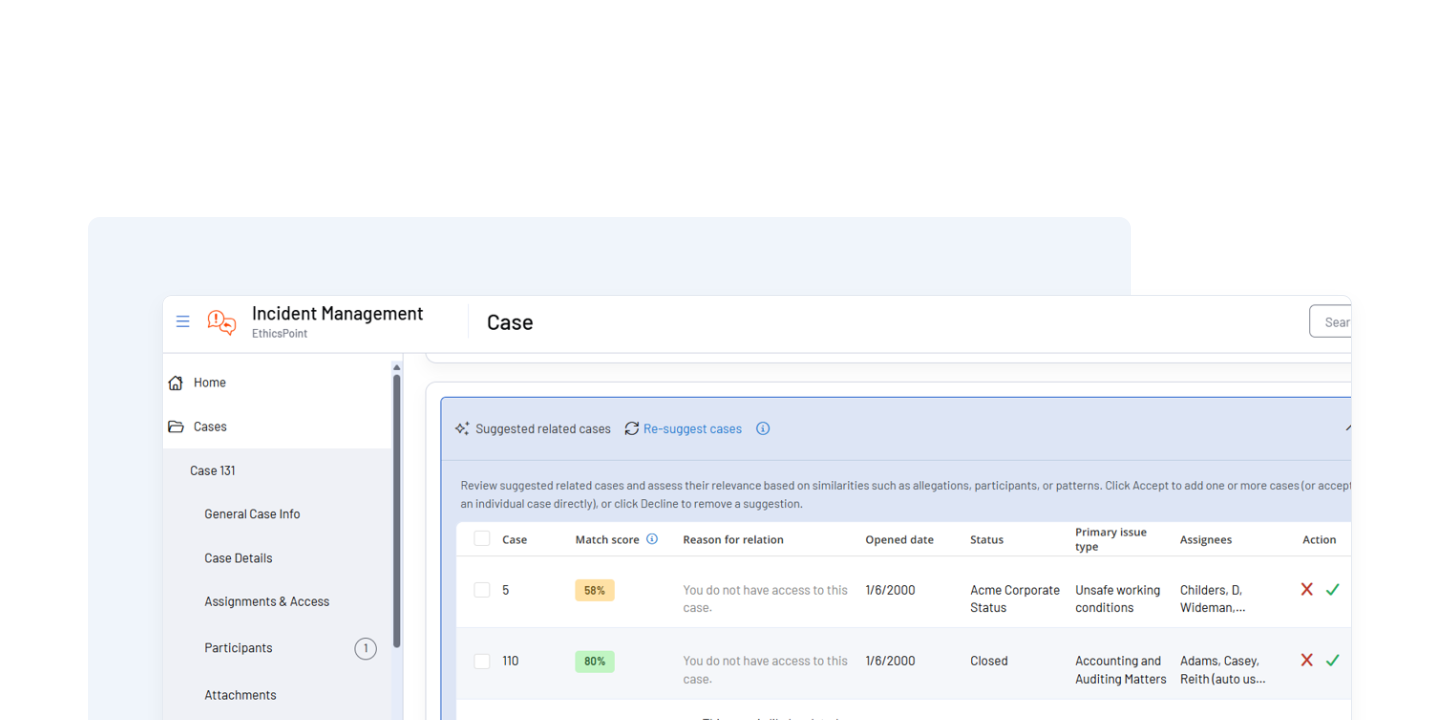
See how AI-assisted workflows help employees report concerns, help compliance teams classify reports, understand case details, improve documentation and manage investigations more efficiently, while keeping human judgment and oversight at the center.
Get the datasheet

16 Jul 2026 NAVEX Editorial Team
The NAVEX article covers what you need to know about anonymous reporting.
Read more
Germany’s regulatory environment is complex and constantly evolving. Get the insights you need to strengthen your compliance program, reduce risk, and build a culture of transparency.